
A child photographs muddy sneakers beside a soccer ball. By including the worn laces, the dirt, and a teammate resting nearby, that child can suggest a story about effort and an afternoon on the field. The storytelling begins with deciding what deserves a place in the picture.
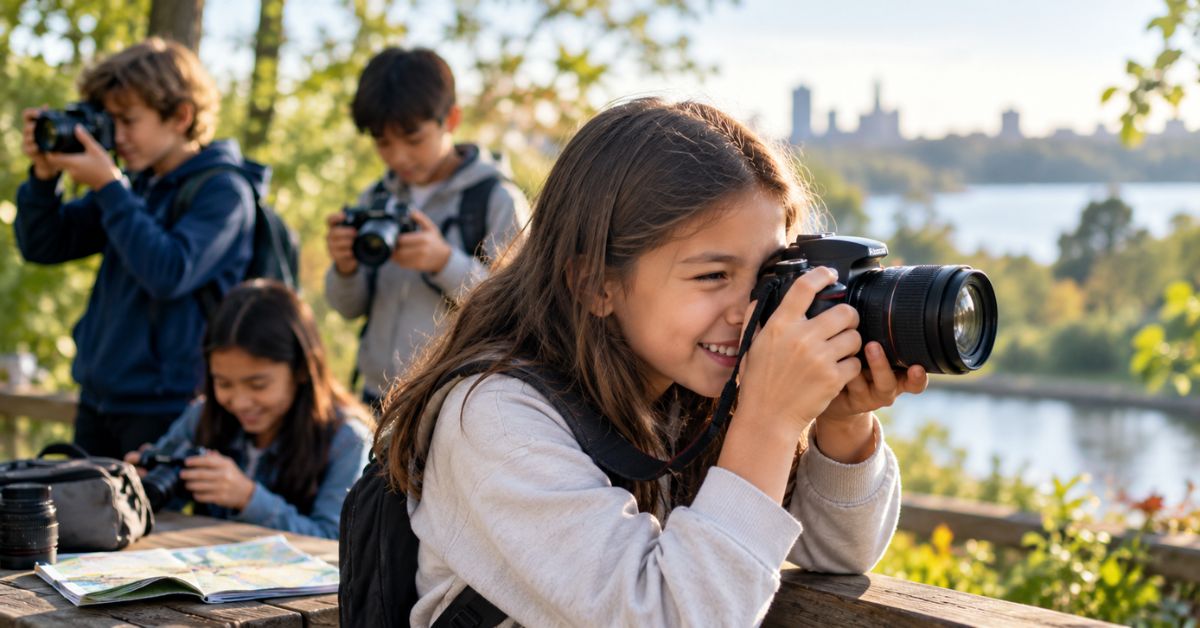
A digital photography camp helps beginners make those decisions deliberately. Camera practice gives them control, creative assignments give them something to communicate, and feedback helps them understand what viewers actually see. At RARE Learning, the digital photography program introduces composition, lighting, and lens usage through practical activities. Here is how those foundations can develop into visual storytelling.
Children Learn to Find a Story in Ordinary Details
Before choosing camera settings, young photographers need a reason to take the picture. A useful starting question is, “What do I want someone to notice?”
Consider a child photographing a family member baking. A picture of the kitchen establishes the setting. Flour on an apron suggests the work involved. Hands shaping dough show the activity itself. Looking for these details gives the child a subject to explore beyond the first obvious shot.
Small assignments make that process manageable. Photographing “something that shows patience” or “a place that feels welcoming” asks children to translate an idea into visible evidence. They begin looking for gestures, objects, and relationships that support what they want to say.
Camera Skills Help Beginners Capture Their Intentions
A storytelling idea becomes easier to communicate when the photographer can control the image. Beginners benefit from learning a few functions, then using each one for a specific purpose.
Focus determines which detail appears sharp. Shutter speed affects how movement appears. Exposure influences whether important details remain visible in bright and dark areas. Introducing these choices through examples keeps the learning connected to the photograph.
For instance, a child trying to photograph a bouncing ball can compare a sharp frame with one that shows motion blur. Each communicates movement differently. Reviewing both makes the setting meaningful.
Simple routines matter, too. Holding the camera steadily, checking the frame, and reviewing the result give beginners a repeatable way to work. As those routines become familiar, children have more attention available for timing and expression.
Composition and Light Give the Story Direction
Composition helps a photographer decide where viewers look first. Placing a subject beside a large empty space might suggest waiting. Moving closer can emphasize an expression. Including part of the surroundings can explain where an action happens.
A useful exercise is to photograph the same subject from three positions: standing, crouching, and moving to one side. Children can then compare what each angle includes and how the subject’s relationship to the background changes.
Light adds another choice. Soft window light can reveal facial details gently, while light from the side can create pronounced shadows and emphasize texture. A bright background can leave a face difficult to see unless the photographer adjusts the setup or exposure.
Trying these variations gives beginners a practical question to answer: Which version best communicates the intended moment? That question connects technical choices to meaning.

Different Subjects Expand a Child’s Visual Vocabulary
RARE Learning’s summer camp curriculum includes portraits, still life, abstract photography, and experimentation with special effects. Each offers a different storytelling challenge.
Portraits invite attention to expression, posture, and surroundings. A person holding a treasured object can reveal an interest that a tightly framed face would leave unseen. Asking permission and explaining the idea also helps make the portrait a respectful collaboration.
Still life gives children time to arrange objects with intention. A library book beside a flashlight could suggest reading after bedtime. Changing the arrangement changes the clues available to the viewer.
Abstract photography shifts attention toward shape, color, pattern, and texture. It can communicate a mood without describing a complete event. Exploring several approaches helps children discover which visual choices suit the ideas they enjoy expressing.
A Photo Sequence Builds a Beginning and an Ending
The move from individual photographs to a connected sequence introduces another storytelling skill: deciding what information the audience needs next.
RARE Learning has described group photo storytelling projects in which students developed stories from selected photographs, including a project using stuffed animals. That example shows how familiar props can support an imaginative narrative.
For a simple practice story about planting a seed, a child might choose:
- A wider photograph showing the pot and workspace.
- A closer view of hands placing the seed in soil.
- A final image of the watered pot on a windowsill.
Each frame contributes new information. Choosing the sequence also means leaving out repetitive images. Children learn to judge a photograph by the job it does within the story, even when another picture is a personal favorite.
Feedback Helps Children Refine and Explain Their Choices
Photo critiques give young photographers a chance to compare their intentions with a viewer’s response. RARE Learning includes critiques and concludes its photography course with students presenting their best photograph for a class vote, as described on its photography course page.
Useful feedback is specific. “The bright object in the corner caught my eye first” gives a child something to reconsider. A general compliment offers less direction. The next attempt might involve changing position, simplifying the background, or waiting for a clearer gesture.
Parents can extend this process by asking children why they selected a particular image. Explaining “I waited until their hands met” helps a beginner recognize a successful decision. Confidence can grow from being able to repeat that choice and understand why it works.
Frequently Asked Questions
Is a digital photography camp suitable for a complete beginner?
A camp that introduces fundamentals can be a useful starting point. RARE Learning’s program covers foundational photography skills; parents can confirm the support available for their child’s experience level before registering.
What ages is RARE Learning’s photography program designed for?
The program is listed for ages 9–15. Review the details for the specific session when choosing a camp.
Can my child use a smartphone at camp?
RARE Learning requires a DSLR camera or equivalent and does not allow smartphones. Confirm that your child’s camera meets the requirement before enrolling.
Does visual storytelling require photo editing software?
No. Children can practice storytelling through subject choice, framing, timing, and image order. Editing software is unnecessary for these starting exercises.
How can children keep practicing after camp?
Choose one familiar activity each week and tell its story in three to five photographs. Ask the child to explain the order and identify one improvement for next time.