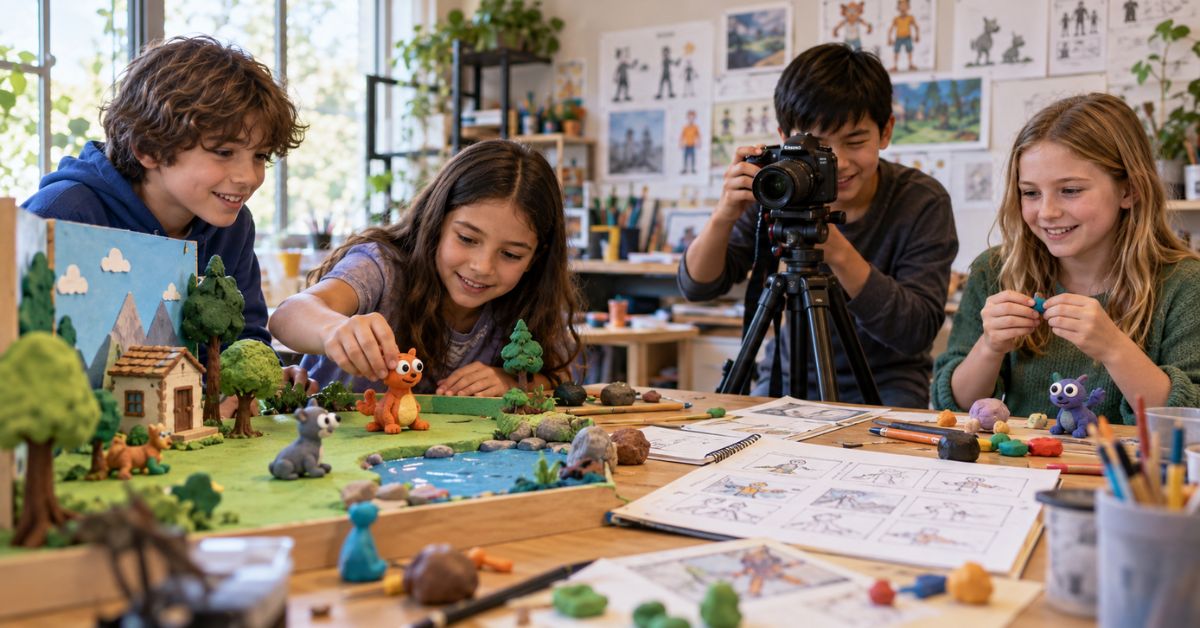
Kids learn animation by making decisions they can see on screen: how a character moves, what happens next, and whether an audience can follow the story. At RARE Learning’s Claymation Creations camp, participants shape clay characters write a script, develop a storyboard and produce an animated short film. Each activity gives imagination a practical job.
The learning happens as children connect their ideas with physical materials and moving images. The examples below show how these parts of the animation process can turn an imagined adventure into a story someone else can watch.
Turning a Big Idea Into a Filmable Story
A child’s first idea might include a magical forest, flying creatures, and several unexpected endings. Scriptwriting helps give that excitement a clear direction. Who is the main character? What do they want? What gets in the way?
Imagine a child inventing a shy creature that discovers a fallen star. A manageable short story could follow its attempt to return the star to the sky. That gives the filmmaker a goal, an obstacle, and a reason for the audience to keep watching.
Choosing one central problem also helps children decide what belongs in the film. An exciting scene still needs a purpose. If it does not help the character or change the situation, it may belong in another adventure.
This is imagination becoming storytelling: selecting possibilities and connecting them through cause and effect. A short script gives those choices a shape that can guide production.
Building Characters That Can Perform
Shaping a clay character asks children to think beyond appearance. The model needs to work in the story and survive repeated handling while its pose changes.
For a first animation, a rounded creature with a broad base may be easier to manage than a tall figure with thin legs. A large, readable face can communicate more clearly on camera than tiny details that disappear in the shot. These choices connect sculpture with the practical needs of filming.
Children also have to consider how a three-dimensional object looks from different viewpoints. A side view may reveal a backward lean that is hard to notice from the front.
Testing a pose before filming gives useful feedback. Can the creature reach the star? Will its arm stay raised? Reshaping a foot or shortening an arm becomes a purposeful design decision, giving children practice adapting an idea to the material in their hands.
Using Storyboards to Think Like a Viewer
Storyboarding turns the written story into a sequence of planned images. The drawings can be simple; their job is to show what the audience needs to see.
For the fallen-star story, one panel might establish the forest, another reveal the discovery, and another show the creature’s reaction. Seeing those images together helps a child notice missing information before photographing the clay figures.
It also introduces a useful distinction between knowing a story and communicating it. The filmmaker may know why the creature is frightened, but viewers need a visible clue.
Choosing the distance of a shot can help. A wider view shows where the character is going, while a closer view draws attention to an expression or important object. Planning these views gives children a reason to think about composition, sequence, and the audience’s attention.
Discovering How Small Movements Create Action
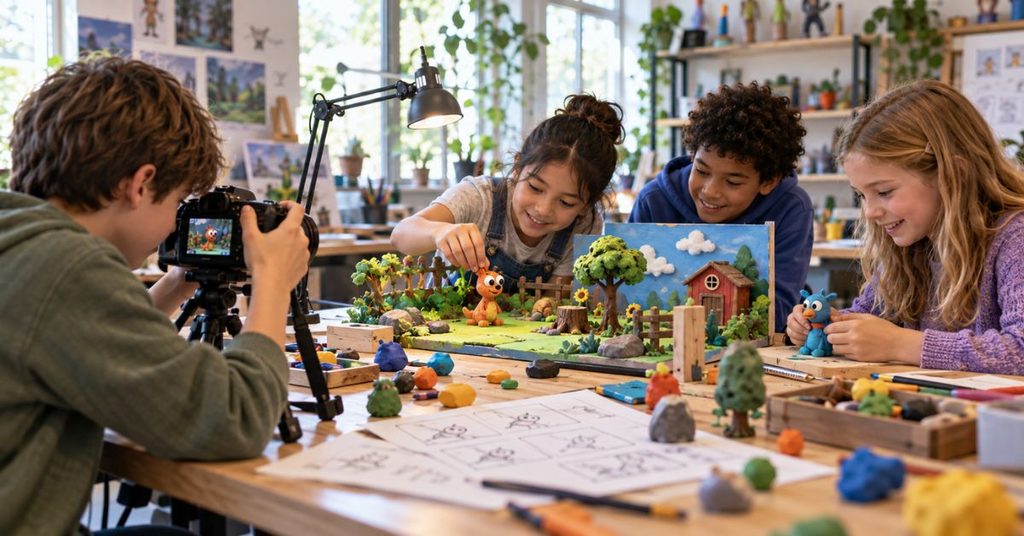
During stop-motion production, movement is broken into individual photographs. The animator adjusts the character between pictures, then plays the sequence to see the action emerge.
A useful beginner experiment is to move a clay figure across the same space twice. In one version, it moves a large distance between photos. In the other, it moves in smaller increments. At the same playback frame rate, the versions will have different speeds and qualities of movement.
This makes timing tangible. Children can see why a hurried action feels different from a cautious one. They can also discover that an action needs enough intermediate positions to be readable.
Keeping the camera steady matters because an accidental shift makes the whole scene jump. Stable lighting and hands cleared from the shot help preserve the illusion too. Such details give careful observation an immediate purpose: every captured frame contributes to what the viewer sees.
Giving Clay Characters Personality Through Movement
Once a character can move, the next creative question is how it should behave. A timid creature might hesitate before touching something unfamiliar. An impatient one might lean forward and reach immediately.
These are acting choices made through poses and timing. A head tilt can suggest curiosity; a lowered body can suggest disappointment. Children can act out an expression themselves, notice what changes, and translate selected details into clay.
Exaggerating a gesture can make it easier to understand on a small screen. The aim is to choose a movement that communicates the intended feeling clearly.
This is where animation and imagination become closely connected. A child’s invented personality starts shaping visible decisions. Two filmmakers could use similar clay figures and still create very different characters through the way they move.
Learning to Improve a Scene Through Playback
Watching a sequence back gives young filmmakers something concrete to evaluate. Does the important action happen too quickly? Does a prop suddenly change position? Can someone follow the scene without an explanation?
Each question points toward a possible adjustment. An unclear gesture might need a different pose. A cluttered background might need fewer objects. An accidental photograph containing a hand might need removal.
A useful habit is to change one thing and compare the result. That helps children connect a specific decision with its effect, instead of guessing why a scene improved.
Playback also makes revision feel purposeful. A first attempt becomes something to work with. Completing a short film involves deciding which changes strengthen the story and which details can wait. That judgment helps an ambitious idea reach a finished form.
FAQs
What ages are RARE Learning’s summer camps designed for?
RARE Learning advertises its summer camps for ages 9–15. Check the age requirements for your selected Claymation Creations session when registering.
Does my child need animation experience?
The workshop is described as an introduction to claymation and stop-motion animation. Contact RARE Learning if you have questions about your child’s readiness or prior experience.
Are clay materials included?
Yes. RARE Learning states that all necessary clay materials are provided. Confirm any separate equipment or personal supply requirements before attending.
What will children create during camp?
Participants create clay characters, a script, and a storyboard, then produce an animated short film featuring their creations.
How can parents encourage these skills afterward?
Invite your child to plan one short scene at home. Ask what the character wants and how viewers will understand it, then let your child make the creative decisions.