
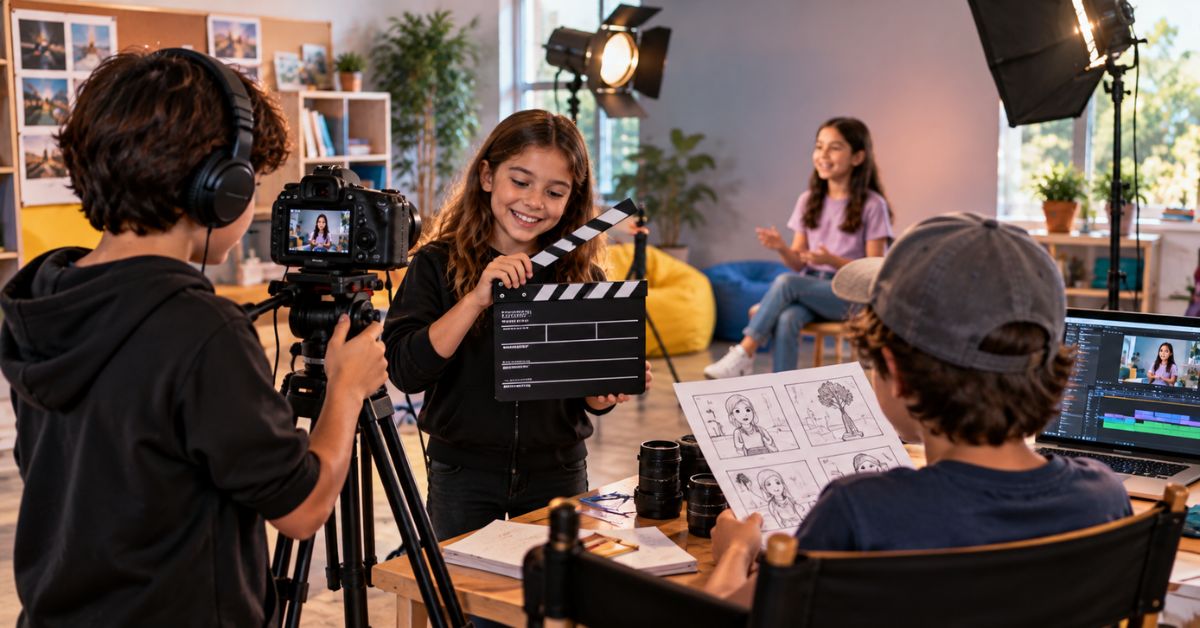
Kids learn video production by making decisions that affect what an audience sees, hears and understands. A story needs a workable script. A scene needs carefully chosen shots. Recorded footage needs editing before it becomes a finished film.
RARE Learning’s Filmmaking for Fun summer camp introduces children ages 9–15 to that process through a collaborative short film. Guided by a qualified video professional, participants explore planning, scriptwriting, composition, shot selection, acting and post-production concepts. The practical value lies in connecting these skills within one project. Here is how those foundations translate into real filmmaking decisions.
Turning an Idea Into a Filmable Script
Pre-production starts with a question: what can the audience actually see happening? A child might imagine an elaborate mystery, but a short film needs a story the team can tell with the time, people, and setting available.
Consider a simple example: two friends discover that a classroom trophy is missing. The script needs to establish the disappearance, give the friends a reason to investigate, and reveal what happened. Each scene should move that story forward.
Writing for the screen also means replacing invisible thoughts with visible actions. Instead of writing “the detective feels suspicious a writer might have the character pause, examine a muddy footprint, and glance toward the door.
This illustrates the practical purpose of the camp’s scriptwriting and planning instruction. Students have to connect an imaginative idea with actions that can be filmed. A manageable story gives the group a clear destination before recording begins.
Choosing Shots That Help Viewers Follow the Story
Composition and shot selection help young filmmakers decide where the audience should look. The camera’s position determines which details become obvious and which remain hidden.
In the missing-trophy example, several shots could serve different purposes:
- A wide shot establishes the classroom and the empty trophy shelf.
- A medium shot shows the friends discussing what they have noticed.
- A close-up reveals the muddy footprint that changes their investigation.
These choices give each image a job. If the clue is too small to notice, the audience may miss a crucial part of the plot. If the scene never establishes the room, viewers may struggle to understand where the characters are.
Thinking through those choices turns camera work into visual storytelling. The useful question becomes, “What does the viewer need to understand at this moment?” That question applies to everything from a short comedy to a school presentation.
Understanding What the Camera and Microphone Capture
RARE Learning’s filmmaking workshop page lists a DSLR camera, microphone, and tripod with a fluid head among the equipment provided. These tools introduce practical considerations beyond pressing the record button.
A tripod supports a steady frame. A microphone helps capture speech, but its placement and surrounding noise still matter. The camera records what is inside its frame, which may include distracting objects the filmmaker has stopped noticing.
A useful habit for any beginner is to record a brief test and play it back. Can the dialogue be understood? Is the important action visible? Does the image stay steady?
For example, a convincing performance can become difficult to follow if background conversation covers a key line. Recognizing that problem before recording the whole scene connects equipment use with the quality of the finished footage.
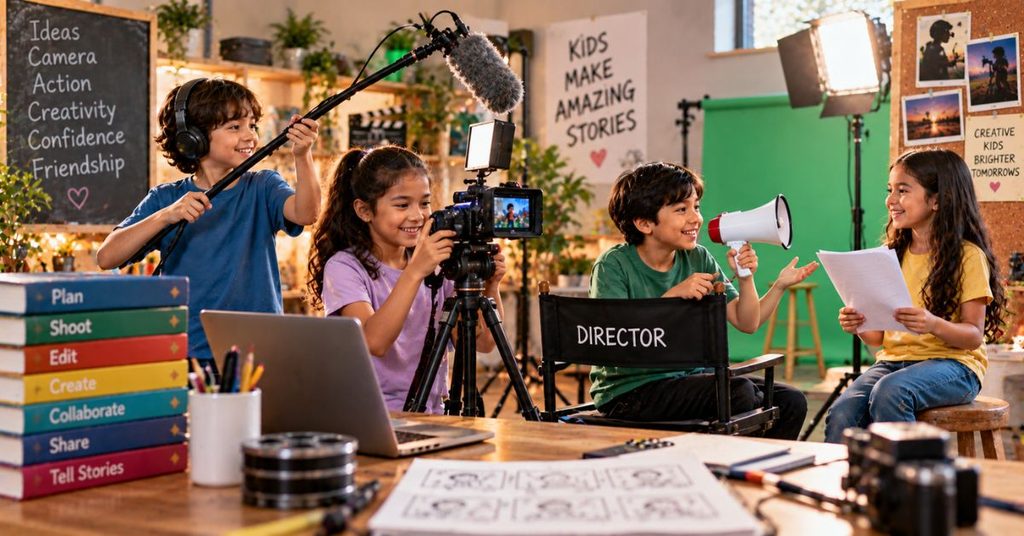
Connecting Acting With Team Production
Acting for a camera requires attention to framing, timing, and other performers. A small reaction can communicate clearly in a close-up. Moving unexpectedly may take an actor outside the planned image.
Continuity introduces another practical challenge. If a character picks up a notebook in one shot, its position should make sense in the next. Matching an action across takes helps separately recorded images feel like one continuous event.
The camp’s collaborative format gives these decisions a shared purpose. A writer’s idea must make sense to the performers, and the planned action must work from the camera’s position. RARE Learning describes students creating scripts, acting, and completing a movie together in its overview of filmmaking summer classes.
Specific communication makes that cooperation productive. “Pause before opening the door” gives a performer something concrete to try. Learning to explain a creative choice is part of learning to make it work.
Discovering How Editing Shapes Meaning
Editing and special effects are included as introductory post-production concepts. Understanding editing begins with recognizing that recorded clips are material from which a story is assembled.
Return to the mystery example. Showing the footprint before the friends notice it lets viewers anticipate their discovery. Showing their startled reaction first, then revealing the footprint, creates a different moment. The footage may be similar, but its order changes the experience.
Timing matters, too. Cutting a pause can make a conversation move faster. Holding a reaction a little longer can give a joke room to land. Keeping unnecessary footage may slow down an otherwise clear scene.
Special effects invite the same judgment: what does this addition contribute? An effect should help communicate an idea or create an intentional mood.
These are meaningful foundations for beginners. Recognizing why a cut works gives a child something useful to practice in future projects, even as editing tools change.
Seeing the Finished Film Through an Audience’s Eyes
Parents can view the short film at the end of the program. That gives the work an audience beyond the group that already knows the story.
For a young filmmaker an audience introduces a valuable test: does the film communicate without someone standing beside the screen explaining it? A missing detail may be obvious to its creators and invisible to everyone else.
After watching, parents can ask a specific question: “Which choice helped tell your story?” Discussing a shot, performance, or edit lets children explain their contribution and identify something they want to improve next time.
Frequently Asked Questions
What ages is Filmmaking for Fun designed for?
The workshop is designed for children ages 9–15. Check the selected session’s registration details when enrolling.
Is the camp suitable for beginners?
The course introduces students to video production and its basic skills, making it relevant to children beginning to explore filmmaking.
How long is the filmmaking camp?
RARE Learning describes it as a weeklong course. The summer camp schedule lists session dates, locations, and class times.
Do children work on a finished movie?
Students collaborate on a short film that parents can view at the end of the program. The project is a team production.
Is filmmaking equipment provided?
RARE Learning lists a camera, microphone, and tripod as provided equipment. Families can contact RARE Learning with questions about preparation for their chosen session.