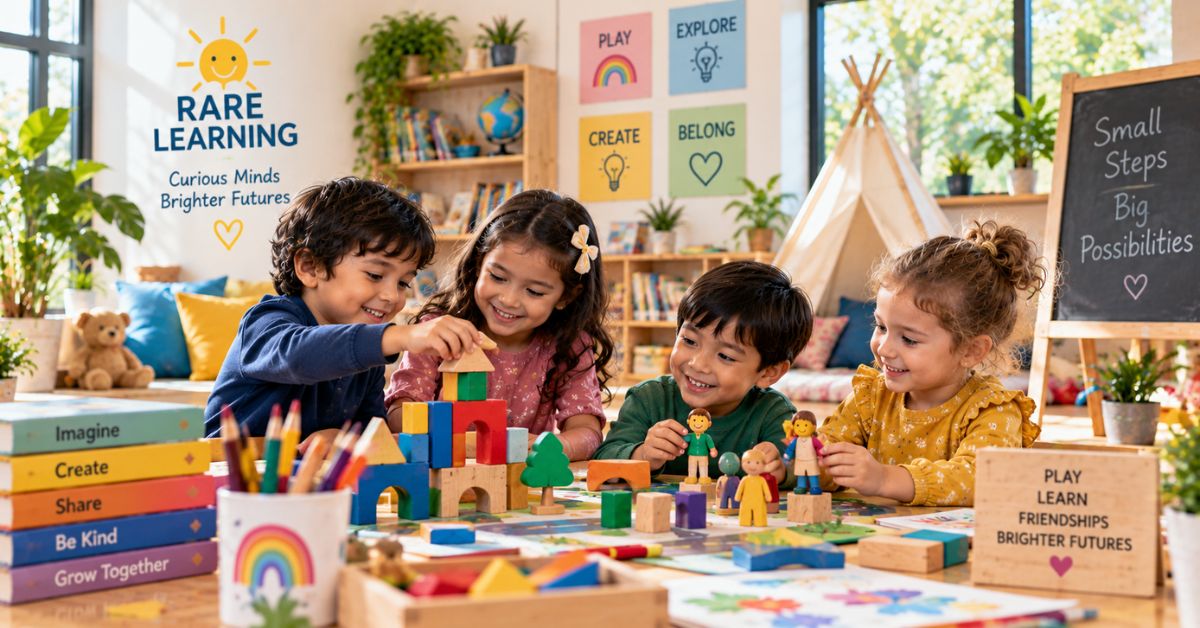
Play-based Pre-K learning gives children everyday opportunities to invent, explain, negotiate, and try again. When children build a pretend neighborhood or create a story together, they make creative choices while learning how their ideas fit with someone else’s.
Those opportunities become more valuable when teachers provide suitable materials, protect time for exploration, and help children through difficult moments. Creativity and social confidence develop gradually, through repeated experiences in which children have something meaningful to contribute. Here is how that learning can unfold in a preschool classroom.
Open-Ended Materials Invite Original Thinking
Blocks, dough, fabric, and blank paper allow children to decide what to make and how to make it. A piece of fabric might become a river, a picnic blanket, or a roof. Choosing among those possibilities gives children practice imagining different uses for the same object.
Art offers similar opportunities. A child mixing colors or pressing patterns into dough makes decisions about texture, shape, and meaning. Leaving room for those choices helps children express ideas that a ready-made outline may never reveal.
Construction adds another creative challenge. Imagine a child making a garage whose entrance is too narrow for a toy truck. Moving the walls or changing the roof becomes a practical experiment. An adult can invite another attempt without supplying the design. The child gets to test an idea and see what changes.
Pretend Stories Make Room for Other Perspectives
During pretend play, children create characters, settings, and events. A classroom bakery might suddenly need a delivery driver because the imaginary customers cannot reach the shop. Keeping that story going requires children to introduce ideas and explain them clearly enough for others to participate.
Taking a role also creates opportunities to consider another person’s experience. A child pretending to be a customer has a different need from the child preparing the order. Teachers can draw attention to those differences: “Your customer is waiting. What could you tell them?”
These moments offer practice noticing feelings and responding thoughtfully. Children still need adult examples and support; acting out a caring role does not automatically translate into kindness during every real disagreement. The value lies in having a familiar situation in which to explore another viewpoint.
Shared Projects Turn Ideas Into Cooperation
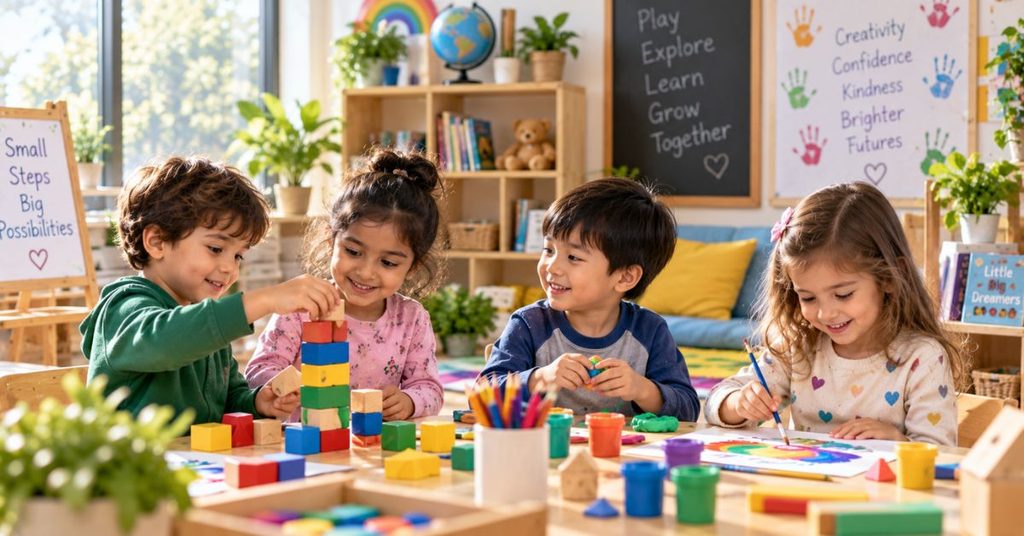
Working toward a common goal makes communication useful right away. Two children creating a pretend campground need to agree on where the tents belong, which materials to use, and how their separate ideas connect.
One child may want a large lake while another wants more space for animals. They can redraw the layout, combine their plans, or divide the available space. Each possibility asks them to listen and adjust.
Simple group games provide a different kind of practice. Children follow shared rules, wait while someone else acts, and notice how their choices affect the group. Rules should match children’s abilities so the game remains manageable.
Through these interactions, children rehearse specific friendship skills: inviting someone to join, explaining a plan, asking for help, and accepting a contribution they did not choose themselves.
Disagreements Create Opportunities to Practice Self-Control
Wanting the same toy or losing a turn can bring strong feelings to the surface. With calm adult support, these moments become opportunities to practice expressing a need and finding a workable solution.
Suppose two children reach for the only toy shopping basket. A teacher can first stop grabbing, acknowledge that both children want it, and help each explain their plan. Once they are calm enough to listen, they might choose to take turns or find another container.
The sequence matters. An upset child may need reassurance and time before being ready to solve the problem. Simply telling children to share can skip that essential step.
Over repeated experiences, children can begin to use helpful language and coping strategies with less prompting. Asking an adult for help remains a useful social skill, especially when a disagreement feels too big to manage.
Thoughtful Teaching Keeps Children Involved
Teachers support creative and social learning by observing before intervening. A child struggling to attach two pieces of cardboard may need a different fastener. A child hovering beside a game may need help finding a way to join.
The most useful support addresses that immediate obstacle while leaving meaningful decisions with the children. A teacher might demonstrate how tape works, then let the child decide where to place it. During storytelling, an open question such as “What could happen next?” can invite several possibilities.
Teachers also need to notice whose ideas are being heard. Offering smaller groups, accessible materials, or ways to contribute through gestures and pictures can help more children participate. A lively classroom supports social growth when children have genuine opportunities to belong and contribute.
Connecting Playful Learning With Pre-K Choices
When considering a program, ask how children make choices, interact with classmates, and receive help during disagreements. Request examples of what teachers do when an activity becomes frustrating or one child takes over a group project.
RARE Learning’s Pre-K program describes hands-on activities, one-on-one instruction, a personalized curriculum, and low teacher-student ratios. Its activity examples include making up stories, games, and cash-register activities. These provide useful starting points for discussing how playful experiences fit into a child’s day.
The curriculum philosophy also describes using varied tools and games to build interest in learning. Families can ask how those experiences balance individual attention with opportunities for children to explore ideas together.
Frequently Asked Questions
Can a shy child benefit from group play?
Yes. A familiar activity with one welcoming peer can offer a comfortable starting point. Give the child time to observe and join gradually, with a teacher’s support when needed.
Is playing alone also valuable?
Yes. Independent play gives children space to follow their own interests and develop ideas at their own pace. A balanced day can include both solitary exploration and opportunities to play with others.
How can parents encourage creative play at home?
Offer a few safe, age-appropriate household materials and let your child choose a direction. Join when invited, follow their storyline and leave time for them to work through small challenges.
Can playful learning also support kindergarten academics?
Yes. A pretend store can include counting items, making signs, and discussing quantities. Teachers can introduce a specific skill within play while preserving children’s involvement in the activity.