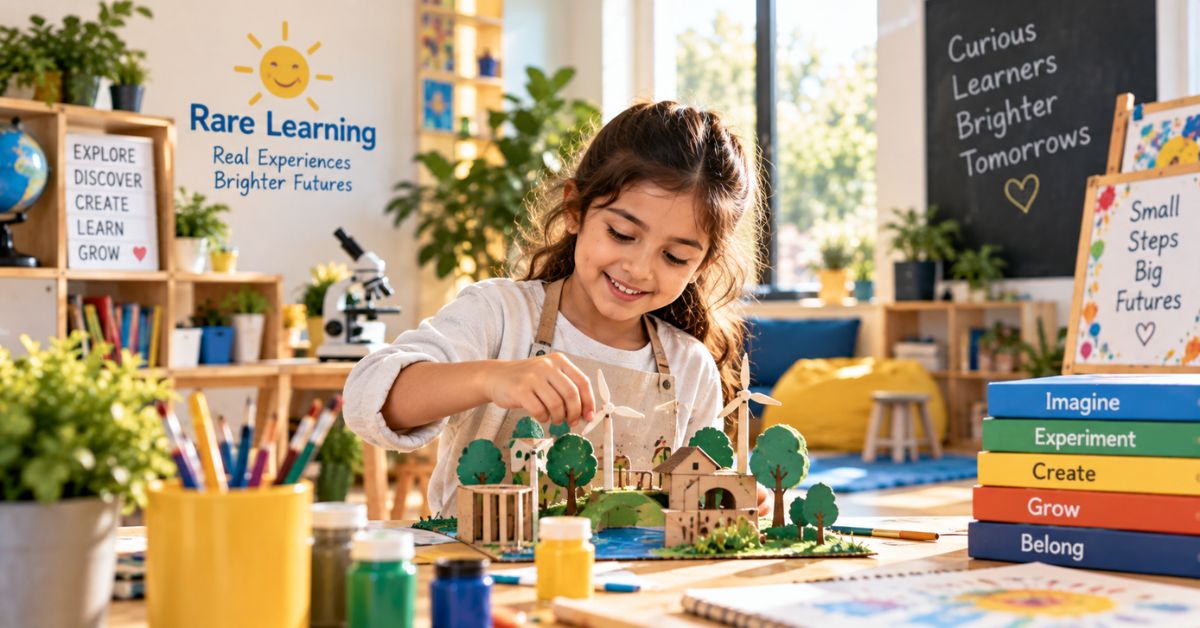
Rare Learning brings together personalized instruction, playful academic activities, and creative projects that give children an active role in learning. Its distinctive strength is how these elements work together: teachers provide direction while children practice, explore, and make decisions for themselves.
For families, that combination answers an important question: what will my child actually do while learning? Rare Learning offers concrete answers, from individual reading support in preschool to making a short film in a creative camp. Its hands-on educational approach connects enjoyable experiences with skills children can continue using as they grow.
Personalized Teaching Gives Each Child a Starting Point
An activity becomes meaningful when it offers a challenge a child can manage. Rare Learning’s preschool program emphasizes individual instruction, low teacher-to-student ratios, and lesson plans shaped around children’s interests and current learning needs.
The program also emphasizes mastery: developing a secure understanding before moving forward. For parents, the practical value is room for different rates of progress. A child who recognizes letters may still need support connecting sounds, while another may be ready to form simple words.
Those examples illustrate why personal attention matters. A teacher can look beyond a completed answer and notice where understanding breaks down. The next step can then address that particular difficulty.
Rare Learning also describes sessions that alternate individual instruction with supervised practice. That structure gives children opportunities to receive help and then attempt a task with greater independence.
The published curriculum includes phonics and short-word reading, alongside science topics such as plants, seasons, and living and nonliving things. These specific goals help parents see what the playful activities are intended to support.
Play Gives Academic Skills a Practical Purpose
Rare Learning includes art, music, storytelling, and hands-on exploration within its preschool approach. These activities give children something to do with the ideas they encounter. A story invites a response; a drawing gives an idea a visible form.
Its guidance on building, drawing, and puzzles shows how everyday materials can create worthwhile learning challenges. Children can compare shapes, plan a structure, explain a picture, or reconsider a puzzle piece that does not fit.
Consider a simple example: a child wants to draw a playground and describe it. Deciding where the slide belongs involves spatial thinking. Explaining who is playing introduces storytelling. Adding marks to label the picture creates an opening for early writing.
The value lies in connecting skills within an activity the child cares about. Parents can ask what a child planned, noticed, or changed to understand the learning behind the finished picture.
Rare Learning also places social interaction alongside literacy and math in its preschool offering. Joining a group, listening to another child, and expressing a need are part of learning how to participate in a classroom. Shared activities create opportunities to practice those everyday skills.
Music adds another practical route. Rare Learning’s discussion of music in early learning explains how songs, rhythm, and movement can support routines, counting, and attention to sounds. Different activities give teachers useful ways to revisit an idea while keeping participation lively.
Technology Comes With Human Guidance
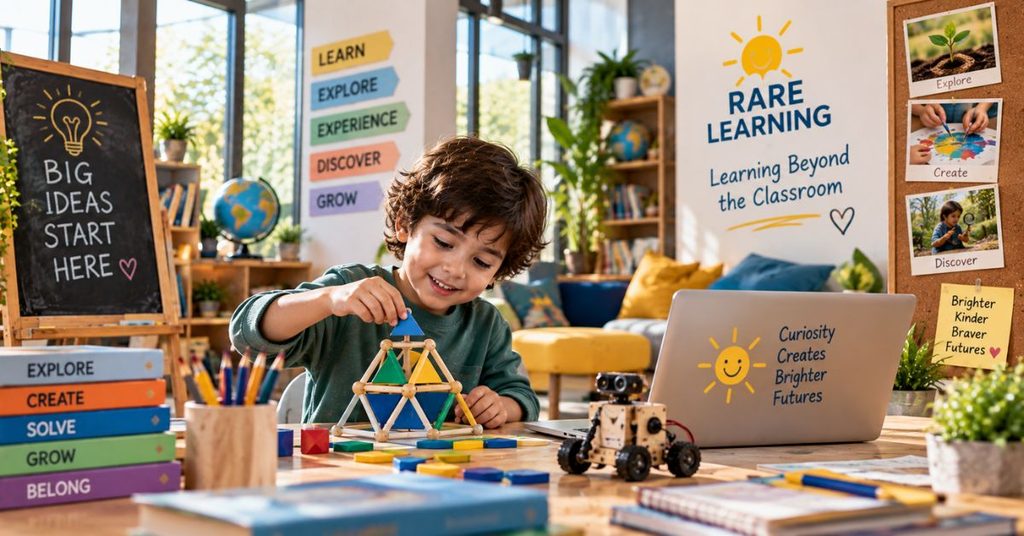
Rare Learning’s curriculum philosophy combines educational technology with individual coaching and varied learning materials. Adult involvement is central to how the program describes using digital tools.
That detail matters when evaluating an educational experience. A screen can display an activity, but a conversation helps reveal what a child understands. A useful follow-up might be, “How did you choose that answer?” or “Can you find something similar in this room?”
These questions illustrate how mentoring can connect a digital activity with experiences a child recognizes beyond the screen.
Creative Camps Give Older Children Something to Make
Rare Learning’s creative summer camps extend active learning into four distinct experiences:
- Filmmaking for Fun: Students explore scriptwriting, camera work, acting, and editing concepts while collaborating on a short film.
- Claymation Creations: Children shape characters, plan storyboards, and produce an animated short.
- Digital Photography: Students investigate lighting, composition, and lenses through challenges and photo critiques, finishing with a contest.
- Junior Newsroom: Participants practice interviewing and presenting through news segments the instructor assembles into a bulletin.
Each format gives practice a visible purpose. Choosing a shot or preparing an interview asks students to make decisions that affect a finished piece. That connection makes the creative process educational.
Progress Tracking Helps Parents Understand Development
Rare Learning describes periodic progress reports that compare a child’s learning with their own earlier achievements. Its approach to parent involvement also encourages families to connect learning activities with everyday experiences.
For parents, this offers a useful way to discuss development: what has become easier, and what still needs practice? A report can provide a starting point for that conversation with the teacher.
Families can then choose manageable opportunities at home, such as inviting a child to explain a drawing or describe the order of events in a story. The aim is continuity between classroom learning and familiar situations.
Community Locations Make Participation More Practical
Rare Learning operates through community and recreation settings in the Dallas–Fort Worth area. Its program locations include options in Plano, Irving, and Frisco.
This local format is part of the platform’s appeal. Families can consider educational fit alongside the realities of travel, pickup times, and the weekly routine. A promising program needs to work within those practical limits for a child to attend consistently.
When exploring a location, parents should ask which program runs there, what the current session includes, and how its schedule fits their child. Availability differs by location and season, so the relevant listing should guide enrollment decisions.
Frequently Asked Questions
What ages does Rare Learning serve?
The current Early Achievers preschool listing specifies ages 3–5. Creative summer camps are listed for ages 9–15. Confirm eligibility for the selected session.
Does a child need a camera for photography camp?
Yes. Digital Photography requires a DSLR camera or equivalent; smartphones are not accepted.
Are clay materials provided for Claymation Creations?
Yes. The Claymation Creations description states that the necessary clay materials are provided.
Can families try a preschool class before enrolling?
Rare Learning advertises a free trial class through its preschool enrollment information. Families can use that option to explore the classroom experience.