A child who rocks in a chair during story time, taps a pencil while solving a problem, or gets up repeatedly during homework can quickly earn the label “distracted.” But movement does not always mean a child has stopped paying attention. Sometimes, movement is part of how a child stays engaged.
For young children especially, learning is not limited to sitting at a desk, listening quietly, and completing worksheets. They are still developing control over their bodies, attention, coordination, and self-regulation. Giving them appropriate opportunities to move can make learning feel more natural and manageable.
Movement can also support concentration, memory, classroom engagement, and academic performance. The CDC specifically recognizes classroom physical activity as a way to help students stay on task, reduce disruptive fidgeting, and participate more actively in learning.
The goal, however, is not to turn every lesson into exercise. It is to recognize when purposeful movement can help a child learn.
Sitting Still Is Not the Same as Paying Attention
Adults often use stillness as a visible sign of concentration. A quiet child looking directly at a teacher appears attentive, while the child shifting positions or touching objects appears distracted.
Learning is more complicated than that.
Some children can listen closely while standing, pacing slowly, drawing, manipulating an object, or changing positions. Forcing them to devote all their effort to remaining perfectly still may leave less energy for the actual lesson.
That does not mean children should be allowed to wander freely whenever they want. Structure still matters. The better question is: Does the movement interfere with learning, or does it help the child remain involved?
A child quietly squeezing a soft object while listening may be engaged. A child running around the room and interrupting classmates needs a different kind of support. Purpose and context matter.
Movement Can Make Learning More Active and Concrete
Movement becomes especially valuable when it is connected directly to what a child is learning.
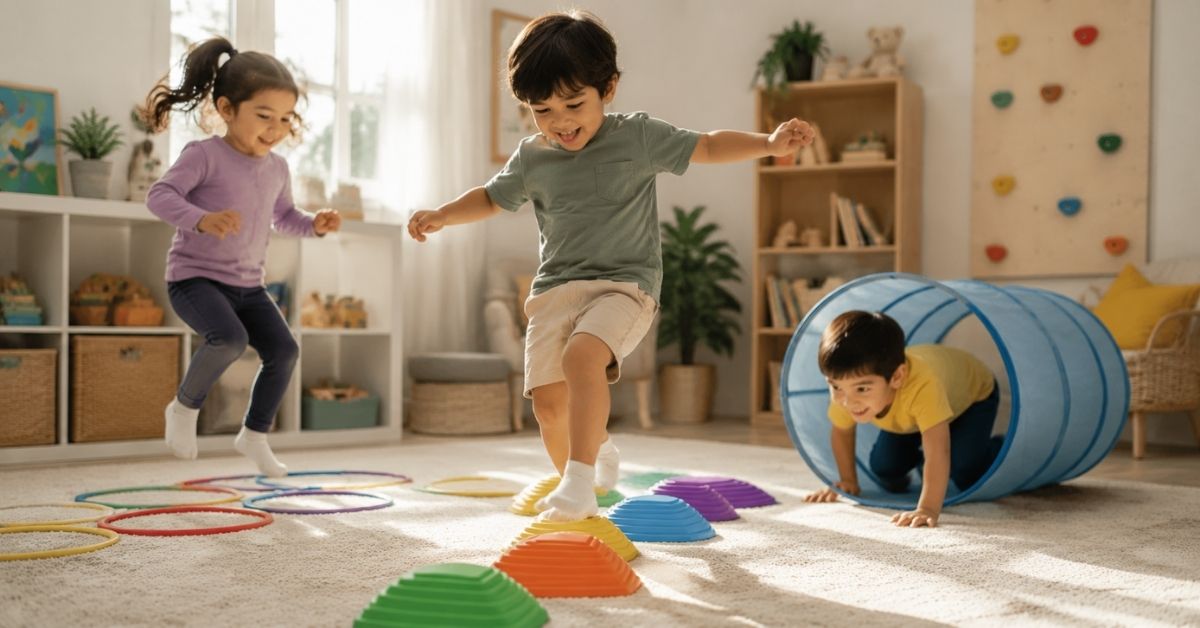
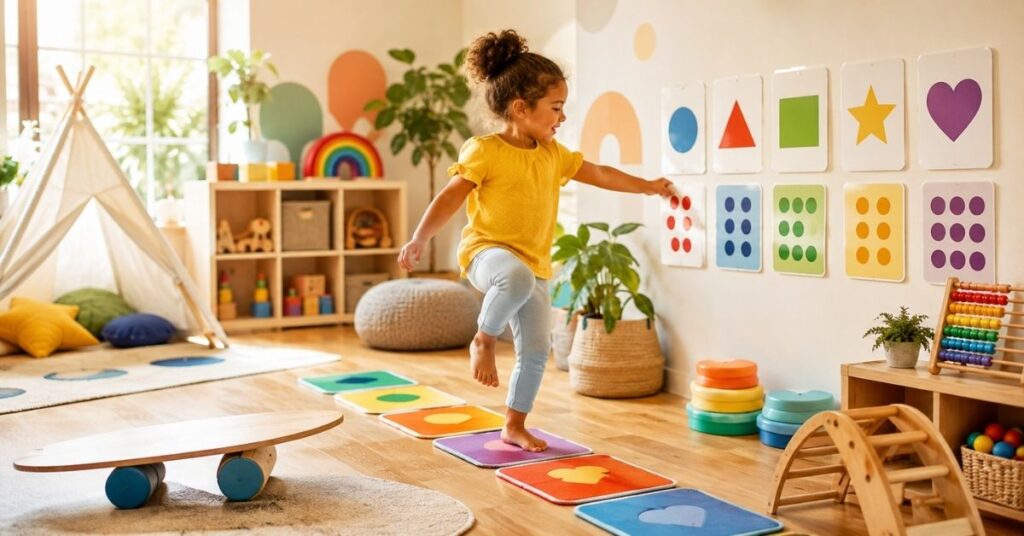
Imagine a preschooler practicing counting. Looking at the number 8 on a worksheet is one experience. Taking eight jumps, placing eight blocks across the room, or walking eight steps while counting creates a richer one.
The same principle can work with language. A child can form letters using arm movements, act out action words, clap syllables, or walk to different parts of the room to sort words by sound.
Physical activity also has broader benefits for children’s attention and memory, along with their physical health. The practical takeaway for parents and educators is simple: sometimes the body can become another tool for understanding the lesson.
Movement During Learning Is Different From a Movement Break
Both approaches have value, but they serve different purposes.
Movement-based learning connects an action to the lesson. A child might hop along a number line or act out a story.
A movement break temporarily stops the academic task. The child stretches, walks, dances, or does another brief activity before returning to the lesson.
Knowing which one your child needs can prevent unnecessary frustration. If the lesson itself feels abstract, adding movement to the activity may help. If the child simply looks restless after concentrating for a while, a short break may be enough.
Signs Your Child May Benefit From More Movement While Learning
Instead of assuming that frequent movement is a behavior problem, watch what happens to your child’s learning before and after movement.
Some useful signs include:
- Focus improves after physical activity. Your child returns to reading or homework more calmly after walking, jumping, or playing.
- Hands-on activities hold attention longer. Building, sorting, drawing, acting, and manipulating objects work better than listening alone.
- Long seated tasks lead to increasing restlessness. Attention fades as sitting time becomes longer.
- Your child remembers actions easily. They may recall a concept better when it was connected to a gesture, game, or physical experience.
- Small movements help without disrupting the task. Standing, changing positions, or using an appropriate fidget helps the child continue working.
The important measurement is not how much the child moves. It is whether the movement improves participation and helps the child complete meaningful learning.
Practical Ways to Add Movement Without Creating Chaos
Movement-based learning works best when children know what they are supposed to do. “You can move while we learn” is too broad. “Jump once for each number we count” provides a clear purpose.
Parents and educators can try simple strategies such as:
- Create a number walk. Place numbers around the room and have the child move to the correct answer.
- Turn vocabulary into actions. Let children create gestures for new words and repeat the word while performing the movement.
- Act out stories. Ask children to demonstrate what characters are doing instead of only answering comprehension questions.
- Use learning scavenger hunts. Hide letters, shapes, colors, sight words, or problem cards around the room.
- Allow position changes. Alternate between sitting at a table, standing at a counter, working on the floor, and using a comfortable reading spot.
- Insert short activity breaks. After a focused learning period, use a quick stretch, dance, walk, or movement game before beginning the next task.
Keep the activity simple enough that the movement does not become more complicated than the lesson itself.
The Best Movement Has Boundaries
Movement helps most when it exists inside predictable routines.
A child should know when movement is encouraged, what kind of movement is appropriate, and when it is time to return to a quieter activity. This allows movement to support self-regulation rather than replace it.
For example, a parent might say, “We’ll work on these five words, take a two-minute movement break, and then read the story.” The child knows that movement is coming and does not have to negotiate for a break every few minutes.
Choice can also help. Instead of asking, “Can you please sit still?” Try offering two productive options: “Would you rather do your spelling words standing at the counter or sitting on the floor?”
The child gains some control over the learning environment while the adult maintains the expectations.
Don’t Assume Every Restless Child Has an Attention Disorder
Fidgeting and difficulty sitting still can occur for many reasons, particularly in younger children. Restlessness by itself does not establish that a child has ADHD or another condition. The CDC notes that ADHD involves an ongoing pattern of symptoms that causes meaningful difficulties in areas such as school, home life, or friendships, and diagnosis involves more than observing a single behavior.
If movement is consistently extreme, interferes with everyday functioning, creates safety concerns, or is accompanied by significant difficulties with attention, impulsivity, learning, sleep, or social interaction, parents should discuss those concerns with their child’s healthcare provider.
For many children, though, the first useful step may simply be observing when restlessness appears and adjusting the learning environment accordingly.
Create a Learning Environment That Fits the Child and the Task
Effective education rarely depends on one method. Reading, conversation, games, technology, hands-on materials, independent practice, creative activities, and movement can all play different roles.
That flexible approach is also reflected in RARE Learning’s curriculum philosophy, which emphasizes using varied tools and engaging activities rather than expecting every child to respond to material in exactly the same way. It also emphasizes one-on-one guidance and helping children connect learning concepts to their everyday environment.
For parents, this means paying attention not only to what a child is learning but also to the conditions in which that child becomes curious, focused, and willing to keep trying.
Conclusion
Children do need to develop the ability to listen, follow instructions, complete tasks, and work quietly when necessary. But those skills do not have to be built by demanding constant stillness.
Purposeful movement can turn an abstract lesson into something a child can see, touch, act out, and remember. It can provide an appropriate outlet for physical energy and make learning sessions easier to sustain.
The future of effective early learning is not likely to be a choice between movement and concentration. The more useful approach is learning how to combine them: active experiences when movement adds meaning, quiet focus when the task requires it, and enough flexibility to recognize that children do not all reach engagement in exactly the same way.
FAQ
Does moving while learning mean my child is distracted?
Not necessarily. Look at whether the movement helps your child listen, answer questions, remember information, and complete the activity. Productive movement and genuine distraction can look different once you focus on the learning outcome.
What are some easy movement activities for preschool learning?
Try counting jumps, letter scavenger hunts, acting out stories, clapping syllables, sorting objects around the room, tracing large letters with arm movements, or walking to the correct answer.
How often should children take movement breaks?
There is no single schedule that suits every child or activity. Watch for signs that attention is fading and use short, predictable breaks before frustration takes over. Classroom physical activity can occur in several brief periods throughout the day.
Can physical activity help children concentrate?
Yes. Physical activity can support attention and memory, and appropriate classroom movement can help children stay on task and engaged.
Should I stop my child from fidgeting during homework?
Not automatically. If a small, safe movement helps your child continue working without distracting others or replacing the task, it may be useful. Set clear boundaries and judge the strategy by whether your child is actually learning.