Rare Learning’s curriculum philosophy stands out through the way it connects personal attention, purposeful activities, and learning beyond the classroom. Its approach brings together academic goals and the practical question every preschool teacher faces: what will help this particular child understand?
For families choosing an early education program, that connection matters. A curriculum becomes meaningful when its principles shape the support children receive, the tasks they attempt, and the progress parents can recognize.
Personalization Has a Place in the Daily Routine
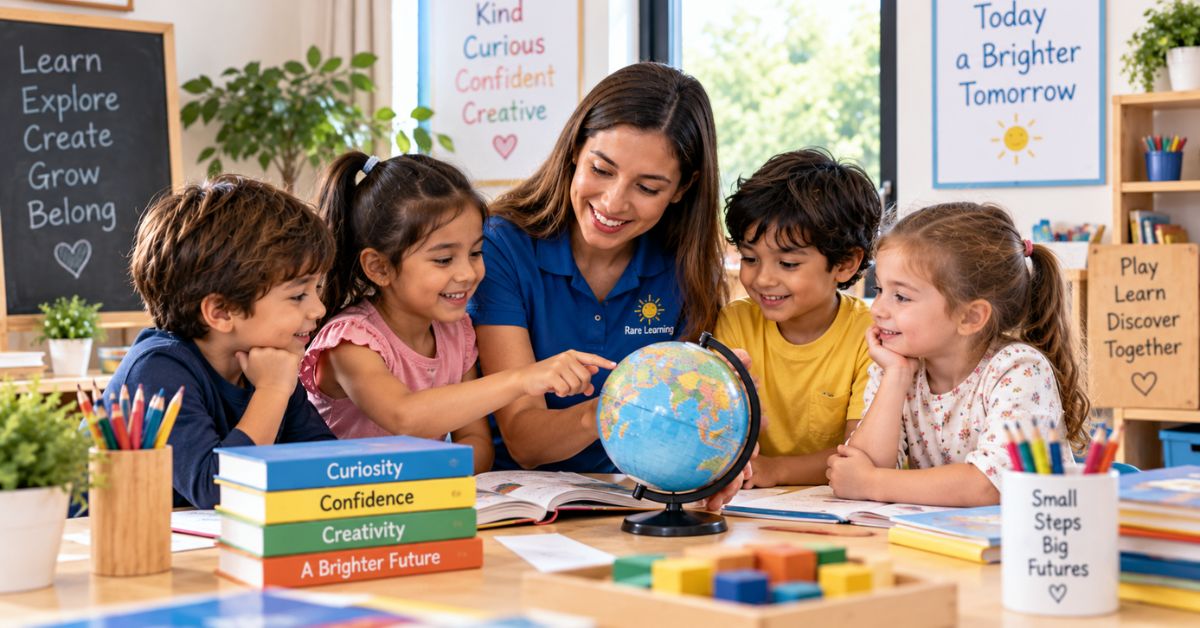
Rare Learning makes individual attention a specific part of its Pre-K program. It describes one-on-one instruction, low teacher-to-student ratios, personalized lessons, and an emphasis on mastering concepts. Its session structure combines individual teaching with supervised practice and varied activities.
That arrangement gives personalization a practical purpose. A child might recognize written numbers but still need help connecting them with quantities. Another might understand a story but need encouragement to explain what happened. These are different teaching needs, even when the children are the same age.
The value of individual instruction is the opportunity to notice those differences. A useful next step follows from what the child can demonstrate. For parents, the question becomes more specific than whether the class completed a lesson: what did their child understand, and what comes next?
Play Carries a Clear Learning Purpose
Rare Learning’s approach to early childhood education combines structured activities with hands-on play, art, music, and storytelling. Academic learning sits alongside opportunities to communicate, create, and work with others.
Consider a pretend shop as an example of how this combination can work. Children can count items, describe what they want, exchange objects, and take turns serving a customer. One activity creates several reasons to use numbers and language.
The educational value depends on what adults notice and encourage. Asking a child to explain a choice can reveal more than simply checking whether the activity is finished. This is a useful way to understand Rare Learning’s philosophy: enjoyable experiences have a place in the curriculum because they provide opportunities for meaningful participation and teaching.
Children Have Several Ways to Explore an Idea
Variety is another defining feature. Rare Learning’s guidance on music in early learning describes purposeful uses for songs, rhythm, and actions, including practicing vocabulary, counting, and following directions.
A concept can therefore appear in more than one form. A child might hear a number sequence in a song, clap along with it, and then count physical objects. Each experience gives the adult another opportunity to see what the child understands.
The same flexibility applies to learning through movement. Acting out an action word or moving while counting connects language with something a child can do. The important distinction is whether an activity supports the lesson. Variety works best when the learning purpose remains clear and children also have opportunities for quiet concentration.
Hands-On Tasks Leave Room for Children to Think
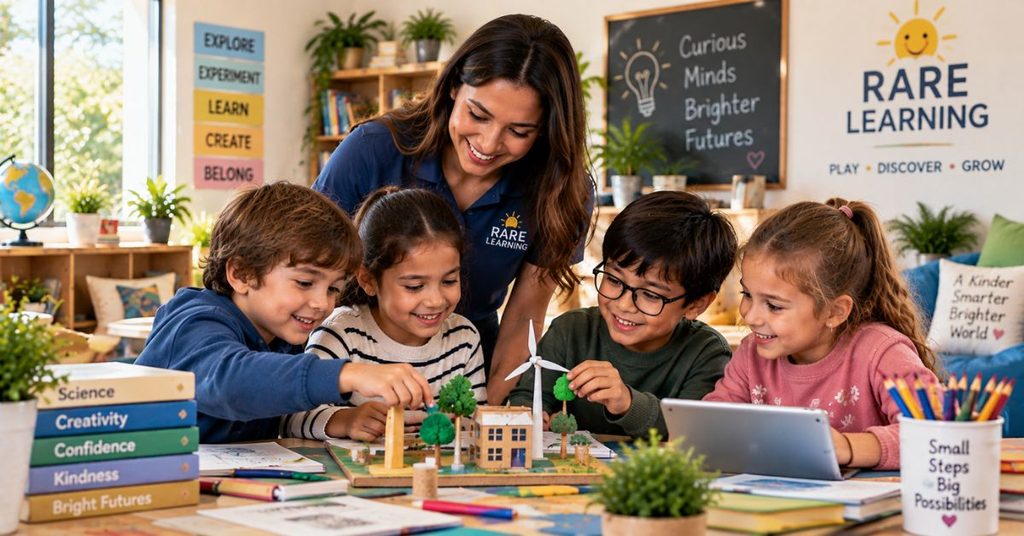
Rare Learning’s discussion of building, drawing, and puzzles adds another dimension to its philosophy: children need opportunities to make decisions and see their effects.
A puzzle piece that does not fit offers immediate feedback. A drawing gives a child a way to express an idea before writing feels comfortable. Construction materials invite choices about shape, position, and balance.
These experiences make the learning process visible. An adult can observe whether a child compares possibilities, changes a plan, or asks for help. Guidance can then take the form of a useful question or a small hint.
This suggests an important standard for evaluating classroom activities: children should have something to figure out. Materials become educationally useful when they invite thinking, adjustment, and another attempt.
Technology Comes With Human Guidance
Rare Learning describes its early education approach as combining technology tools with one-on-one instruction in reading, math, and science. The relationship between the tool and the adult is central to understanding this choice.
For example, after a child completes a digital matching activity, an adult could ask what the matched items have in common. The answer may show understanding that a completed screen alone cannot explain.
For families evaluating modern education, this offers a practical question: what does the teacher add to the technology experience? Explanation, conversation, and help applying an idea give digital activities a clearer educational purpose. The quality of that interaction deserves as much attention as the tool itself.
Progress Connects the Classroom With Home
The curriculum philosophy describes periodic progress reports that compare children with their own earlier achievements. It also gives parents an active role in helping children connect educational material with everyday surroundings.
Together, these commitments offer a useful way to make progress understandable. Families can look for what has changed: a task that requires less help, a concept a child can explain, or a skill used in a new situation.
Those observations can guide conversations with teachers. If a child demonstrates a skill at home but hesitates in class, sharing that detail gives both adults a fuller picture. Progress reporting becomes most useful when it leads to a clearer next step and a practical way to support it.
Everyday Language Gives Learning Lasting Meaning
Rare Learning’s guidance on early reading and speaking skills extends this approach into ordinary family interactions. Shared books, conversation, pretend play, and responses to children’s questions all create opportunities to use language meaningfully.
This matters because recognizing a word and using it confidently are different accomplishments. A child may hear a new describing word in a story, try it while playing, and later use it to explain something that happened.
The broader implication for curriculum design is continuity. Classroom learning becomes more useful when children can recognize it in their own lives. Families can support that connection through attentive conversation and familiar routines, without needing to reproduce the entire preschool day at home.
FAQs
Does Rare Learning use worksheets?
Yes. Its program includes personalized worksheets alongside hands-on activities, play, and individual instruction. Worksheets are one part of the learning experience.
Does the philosophy require children to learn at the same pace?
No. Rare Learning describes lessons tailored to individual progress, with attention to understanding and mastering concepts.
Can movement be part of a focused lesson?
Yes. Counting actions or acting out vocabulary can serve a learning goal. The activity should help children participate without overwhelming the task.
Do parents need special equipment to support learning?
No. Books, conversation, drawing materials, and ordinary household objects can provide useful opportunities to practice and explore.