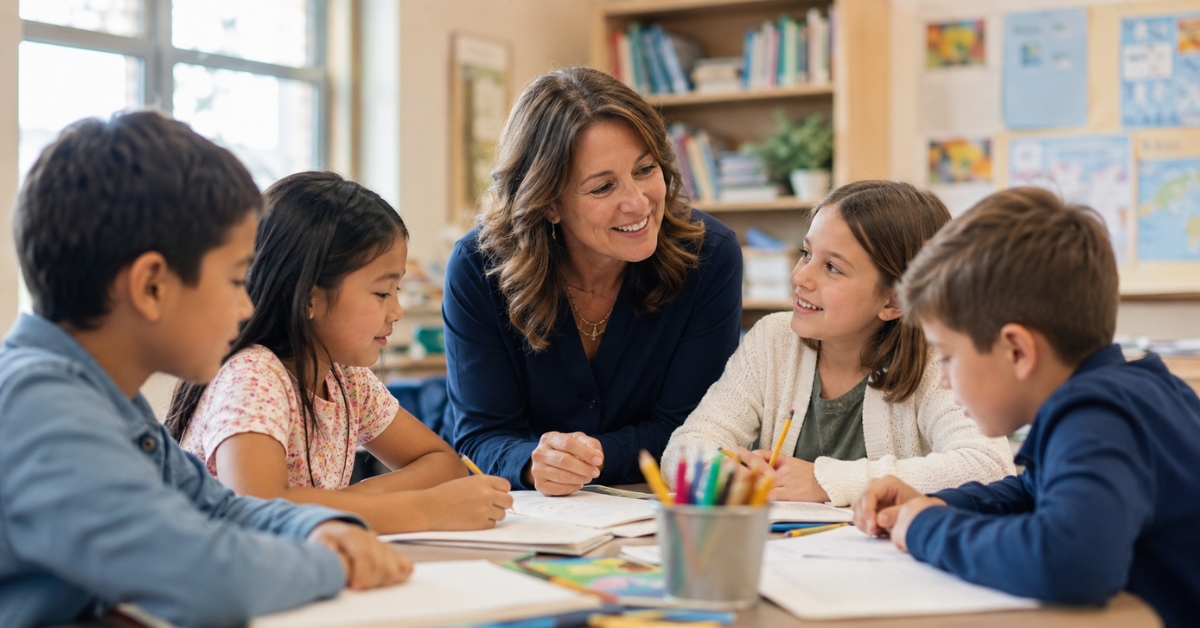
Parents often compare educational programs by looking at the curriculum, facilities, class schedule, and technology. Those details matter but they do not always reveal what happens when a child becomes frustrated, loses interest, races ahead or needs a concept explained in a completely different way.
That is where experience becomes important.
More than 20 years in education gives a program the opportunity to see thousands of learning moments: the activity that finally helps a child understand letter sounds, the question that unlocks mathematical thinking, the classroom routine that encourages independence, and the type of feedback that builds confidence instead of pressure.
However, longevity alone does not guarantee quality. Experience creates better learning outcomes only when educators turn what they have learned into stronger instruction, a more responsive curriculum, consistent classroom practices, and meaningful communication with families.
RARE Learning has operated since 2003, giving the organization more than two decades to refine its personalized preschool and enrichment programs. Its approach combines structured academic instruction with hands-on activities, individual attention, and opportunities for children to learn at an appropriate pace.
Educational Experience Is Valuable When It Becomes a System
A long history is useful only when it changes how a program operates today.
Experienced educators accumulate practical knowledge about how children respond to different instructions, materials, routines, and levels of challenge. Over time, effective approaches can be documented, taught to other instructors, and built into the program’s daily structure.
This turns individual knowledge into institutional knowledge. Instead of depending on one talented teacher to make every decision, the program develops reliable methods for lesson planning, observation, progress tracking, classroom management, and family communication.
Teaching effectiveness can continue to improve during the second and even third decades of an educator’s career. The benefit is especially strong when educators deepen their experience with the same age group or subject and work in a supportive environment where effective practices are shared.
For families, this means a more consistent learning experience. For an education provider, it means quality can be maintained across instructors, classrooms, sessions, and locations.
Seasoned Educators Read the Child Not Just the Lesson Plan
A lesson plan describes what should be taught. It cannot fully predict how each child will respond.
An experienced educator pays attention to what happens between the planned steps. Is the child confused by the concept, distracted by the environment, uncomfortable with the material, or simply tired? Is the work too difficult, or does the child understand it but struggle to express the answer?
These distinctions affect what the teacher should do next.
They Recognize the Difference Between Difficulty and Readiness
Consider a preschooler who does not complete a letter-writing activity. A quick conclusion might be that the child has not learned the letter.
A closer observation may reveal something different. The child might recognize the letter and its sound but lack the fine-motor control needed to form it comfortably with a pencil. Repeating the same worksheet would not address the real barrier. Tracing the shape in sand, building it with manipulatives, or using a larger writing tool may produce a better result.
Experienced teachers learn to look beyond whether an answer is right or wrong. They notice the process the child is using and select the next activity accordingly.
They Adjust Instruction Without Lowering Expectations
Responsive teaching does not mean making every task easier. It means providing the right kind of support so the child can continue making progress.
An educator might reduce the number of steps, demonstrate the first example, change the material, connect the concept to a familiar experience, or give the child more time. Once understanding improves, that support can gradually be removed.
Effective early-childhood instruction adapts to a child’s age, development, individual characteristics, prior experiences, and family context while still working toward meaningful learning goals.
A Mature Curriculum Is Refined, Not Simply Repeated
Twenty years of experience should not produce a curriculum that has remained unchanged for 20 years. It should produce a curriculum that has been tested, reviewed, and improved through repeated use.
Educators discover which activities create genuine understanding and which ones merely keep children occupied. They learn where children commonly become confused, which skills need additional practice, and when an activity should be shortened, expanded, or replaced.
Skills Are Taught in a More Purposeful Sequence
Foundational learning is cumulative. A child usually needs to recognize quantities before working confidently with addition. Early reading requires more than memorizing the alphabet; children must begin connecting letters, sounds, spoken words, and meaning.
A mature curriculum accounts for these relationships. It introduces concepts in an order that allows one skill to support the next.
Well-planned early-learning curricula connect experiences across age levels so that new knowledge builds coherently on what children have already learned. They also retain enough flexibility for teachers to adapt activities to the interests and needs of a particular child or class.
Activities Have a Clear Learning Purpose
Children can learn through direct instruction, guided practice, conversation, games, creative projects, and independent exploration. The key is knowing why an activity is being used.
For example, a pretend store can strengthen counting, number recognition, vocabulary, turn-taking, and decision-making. Storytelling can support listening, sequencing, memory, and verbal expression. Building with blocks can introduce balance, comparison, planning, and spatial relationships.
Experience helps educators connect enjoyable activities to specific learning goals rather than treating play and academics as unrelated parts of the day.
Personalization Becomes Specific and Measurable
“Personalized learning” can become an empty phrase when every child receives the same activity, at the same pace, with the same level of assistance.
Real personalization begins with careful observation. The educator identifies what the child can do independently, where support is still needed, and what the next achievable challenge should be.
In practice, meaningful personalization may include:
- Starting from the child’s current understanding rather than relying only on age or grade expectations
- Changing the amount and type of assistance provided
- Using different examples, materials, or contexts to explain the same concept
- Adjusting the pace without losing sight of the learning goal
- Documenting progress and choosing the next activity based on what the child demonstrates
Ongoing observation allows teachers to plan intentionally, monitor movement toward learning goals, communicate clearly with families, and improve future experiences. Young children may also demonstrate the same skill differently depending on the activity, setting, language, or level of comfort, making informed observation particularly important.
RARE Learning’s preschool structure supports this approach through low teacher-student ratios, individualized lesson materials, one-on-one instruction, and a curriculum that allows children to progress at their own pace.
Experience Creates a Calm and Predictable Learning Environment
Learning outcomes are influenced by more than the content of a lesson. The emotional and physical environment also affects whether a child feels ready to participate.
Predictable routines help children understand what will happen next. Clear transitions reduce unnecessary confusion. Familiar expectations make it easier for children to manage materials, wait for a turn, ask for help, and move between activities.
This does not require a rigid classroom. Experienced educators know when to maintain a routine and when flexibility would better serve the child.
They also learn to prevent many behavioral difficulties before they escalate. A teacher may notice that a child becomes restless during a long group activity, overwhelmed by too many materials, or frustrated when instructions contain several steps. Instead of treating the behavior as the entire problem, the educator can adjust the environment.
Responsive, back-and-forth interactions with attentive adults support early communication, social development, and more complex cognitive skills. Smaller groups and individual attention create more opportunities for teachers to notice and respond to a child’s signals.
Better Questions Produce Deeper Learning
A child completing an activity is not the same as a child understanding it.
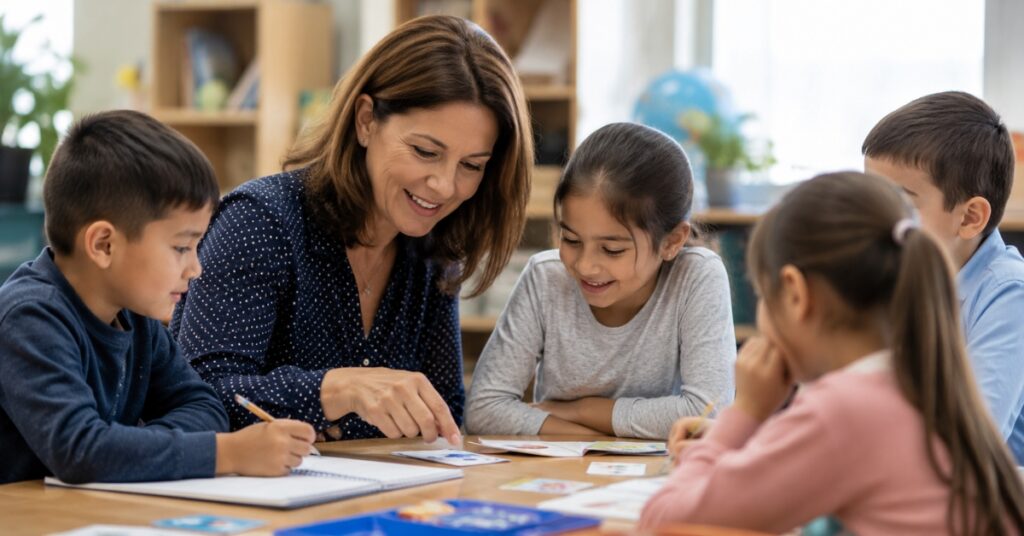
Experienced educators use questions to uncover the child’s thinking. Instead of asking only, “What is the answer?” they may ask:
“How did you figure that out?”
“What do you think will happen next?”
“Can you show me another way?”
“What changed when you moved that piece?”
These questions reveal whether the child is guessing, recalling, comparing, reasoning, or making a meaningful connection.
They also turn mistakes into useful information. A wrong answer may show that the child has misunderstood a direction, reversed a sequence, overlooked a visual detail, or applied a familiar rule in the wrong situation. Once the teacher understands the source of the error, feedback becomes more precise.
The result is not simply better performance on one activity. The child begins learning how to explain ideas, try alternatives, and persist when the first attempt does not work.
Long-Term Experience Strengthens Teacher Training
An experienced program can improve outcomes beyond the work of its longest-serving educator.
Over time, strong organizations identify the teaching practices they want every instructor to understand. They develop clearer onboarding, model effective interactions, improve lesson resources, and create a shared language for discussing children’s progress.
This supports greater consistency. Families are less likely to receive completely different experiences depending on the instructor or session their child attends.
Experienced teachers can also raise the quality of the wider team by sharing practical knowledge, mentoring colleagues, and helping improve program-wide decisions—not just the results of the children assigned directly to them.
For education providers operating in multiple locations or offering several types of programs, this transfer of knowledge is essential. Growth should not require sacrificing the thoughtful practices that created trust in the first place.
Family Communication Becomes More Useful
Families need more than a general message saying their child had a good day.
Experienced educators know how to communicate progress in a way that is specific, understandable, and useful at home. They can explain not only what the class covered but how the child approached the activity and what skill is beginning to emerge.
A valuable progress update should answer:
- What can the child now do independently?
- Which skill is currently developing?
- What kind of support is helping?
- What is the next instructional goal?
- How can the family reinforce the skill naturally at home?
For example, “We worked on numbers today” offers limited information. A more useful update would explain that the child can count objects accurately to eight but still needs support matching the final count to the total quantity. The family can then practice by counting snacks, steps, blocks, or items in a grocery cart.
Families are a central part of school readiness, and their knowledge of the child should inform learning goals and classroom decisions. RARE Learning incorporates periodic progress reports that track accomplishments across subject areas and compare each child’s development with their own earlier performance.
Experienced Programs Understand That Readiness Is More Than Academics
Parents naturally want children to enter kindergarten with strong early literacy and math skills. Those skills matter, but they are only part of readiness.
A child also needs to communicate needs, listen to directions, participate in a group, manage transitions, use learning materials, recover from small frustrations, and attempt unfamiliar tasks.
A preschooler may recognize many words but struggle to ask for help. Another may be confident socially but avoid activities that require sustained attention. A third may understand number concepts but become discouraged after making one mistake.
An experienced program looks at the whole child rather than treating academic performance as the only measure of progress.
School readiness includes language and literacy, cognition, social and emotional development, physical and motor development, and approaches to learning such as curiosity, attention, and persistence.
This broader view protects children from being pushed toward isolated skills before they have the supporting habits needed to use those skills successfully in a classroom.
What Parents Should Expect From an Experienced Education Provider
More than 20 years in operation should be visible in the quality of the program—not just in its marketing.
The Curriculum Should Have Evolved
Parents can ask how lessons have changed over time. A strong provider should be able to explain what has been improved, why certain activities are used, and how instruction responds to children with different starting points.
Progress Should Be Documented Clearly
Educators should be able to describe a child’s current strengths, emerging abilities, and next goals. Progress monitoring should guide instruction rather than exist only as paperwork.
Classroom Routines Should Feel Intentional
During a visit or trial class, notice how teachers give instructions, respond to questions, manage transitions, and help children recover from frustration. Calm classrooms are not necessarily silent classrooms. They are environments in which children understand the expectations and feel safe enough to participate.
Experience Should Be Shared Across the Team
Ask how instructors are trained and how the program maintains consistency. A long-established organization should have methods for transferring knowledge to new staff instead of keeping expertise with only one or two individuals.
How RARE Learning Turns Experience Into Better Outcomes
Since 2003, RARE Learning has developed a high-touch approach that brings together structured instruction and active exploration.
Its Early Achievers Preschool Program serves young learners through personalized math and language activities, hands-on experiences, individual attention, and low teacher-student ratios. Sessions use varied learning segments rather than expecting preschoolers to remain with one type of task for an extended period. The broader curriculum includes reading, writing, math, science, games, and activities that encourage children to apply skills in different contexts.
RARE Learning also extends this practical approach to older children through project-based summer programs in filmmaking, photography, claymation, and video journalism. Participants do not simply hear about creative processes; they develop scripts, build storyboards, work with equipment, collaborate, and produce finished projects.
These program features demonstrate what educational experience should produce: clearer learning goals, more purposeful activities, closer observation, and instruction that remains responsive to the learner.
Conclusion
More than 20 years in education can create a powerful advantage, but the number itself is not the outcome.
The real value appears in the decisions educators make every day: noticing why a child is struggling, selecting the right next activity, refining a lesson that is not working, maintaining a calm classroom, sharing expertise across the teaching team, and giving families useful guidance.
The future of education will bring new tools, changing expectations, and fresh ways for children to explore ideas. Experienced programs are well positioned to evaluate those developments thoughtfully. They can adopt what genuinely improves learning without abandoning the personal relationships, careful observation, and responsive instruction that young learners continue to need.
For RARE Learning, more than two decades of experience should not be viewed as a finished achievement. It is a foundation for continued improvement—and for creating learning experiences that are more personal, purposeful, and effective for every child.
Frequently Asked Questions
Does a program automatically become better because it has operated for many years?
No. Experience improves quality only when the program uses it to refine instruction, train educators, evaluate progress, and update the curriculum.
How can parents tell whether experience is improving their child’s learning?
Look for specific progress updates, individualized activities, calm classroom routines, thoughtful teacher responses, and clear next-step goals.
Why is one-on-one instruction helpful for young children?
It allows the educator to observe how the child is thinking, identify misunderstandings quickly, and adjust the level of support immediately.
Can an experienced education program still use new technology?
Yes. Experience helps educators select technology for a clear learning purpose rather than using it simply because it is new.
What outcomes should families expect from a quality preschool program?
Children should make age-appropriate progress in literacy, language, math, communication, independence, attention, problem-solving, confidence and social participation.