Most parents don’t lose sleep over whether their four-year-old can name the color purple. What keeps them up is a quieter worry: is my kid actually ready for what comes next, and am I setting them up to enjoy learning or to dread it?
That worry has changed how families shop for preschool. A generation ago, the questions were simple. Is it safe, is it warm, will they take a nap. Those still matter. But more parents now walk into a tour with a different question in mind, even if they can’t quite name it: will this place help my child become someone who tries hard things and thinks for themselves?
That’s a big ask for a preschool. It’s also the right one.
The preschool question has quietly changed
Kindergarten is not what it was. Work that used to belong to first grade has slid down a year, and children are expected to arrive already comfortable with letters, numbers, and sitting through a group lesson. Parents feel that pressure secondhand, usually through an older sibling or a neighbor whose child started school and struggled.
So the old daycare model, warm but mostly about supervision, starts to feel thin. A child can spend two happy years finger-painting and still show up to kindergarten unsure how to raise a hand, ask a question, or keep going when a task gets frustrating. Parents sense the gap. They also sense the opposite risk, which is a program that pushes worksheets so hard the child decides by age five that school is something to survive.
What they’re really looking for sits between those two. Not a daycare, not a drill camp. A place that teaches real skills in a way that leaves the child more curious than when they walked in.
What “academic” should actually mean at age four
The word “academic” scares a lot of parents, and I understand why. It calls up an image of tiny kids hunched over flashcards, reciting things they don’t understand. That version exists, and it does more harm than good.
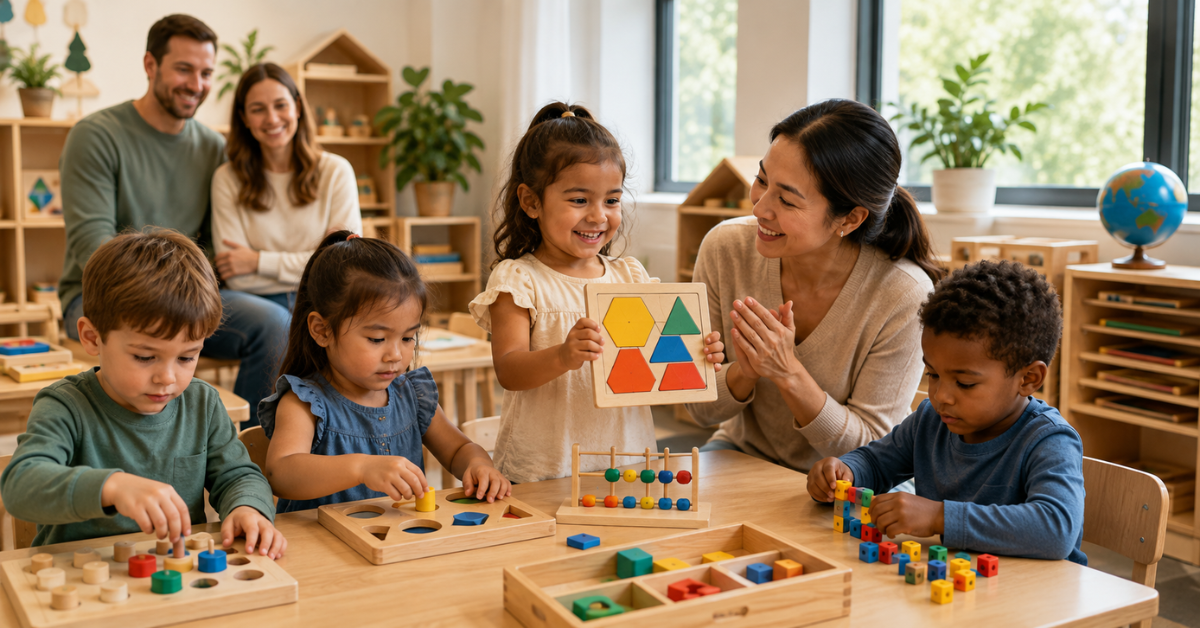
Done well, an academic preschool looks almost nothing like that. The academics are real, but they arrive through hands, blocks, questions, and conversation rather than rote repetition. A child learns what “more” means by dividing crackers with a friend, not by circling the bigger number on a page. They learn letters because their own name means something to them, not because a chart says today is the letter M.
Reciting is not the same as reasoning
Here’s a distinction that matters more than almost anything else, and most flashcard programs miss it entirely. A child can count to twenty and still not understand quantity. Put two piles of blocks in front of them, one with six and one with nine, and ask which has more. Plenty of kids who “know their numbers” will guess, or point at the pile that looks taller even when it has fewer blocks.
Counting to twenty is memory. Knowing which pile has more is thinking. A good preschool cares far more about the second one, because thinking is the part that keeps working long after the memorized list runs out.
Why confidence is the skill underneath the other skills
When parents say they want a confident child, they usually don’t mean a loud one. They mean a child who is willing to try when the outcome isn’t guaranteed. That single trait does more for early learning than any letter or number a child can name.
Picture two kids at the same puzzle. Both get stuck on the same piece. One keeps rotating it, tries a different spot, glances back at the picture, and eventually gets it. The other freezes, decides they “can’t do puzzles,” and wanders off. Give those two children a year, and the gap between them won’t be about intelligence. It will be about who kept attempting.
That’s the whole game at this age. Children learn by attempting, failing, and adjusting. A child who is afraid of being wrong stops attempting, and once they stop attempting, they stop learning, no matter how bright they are. This is why the best programs spend so much energy making mistakes feel ordinary. A four-year-old who can be wrong out loud without shame is a child who will keep raising their hand for the next fifteen years.
What critical thinking looks like in a room full of four-year-olds
Critical thinking sounds like something for a high school debate class, not a room where half the kids still can’t tie their shoes. But the foundation gets built right here, and it looks nothing like arguing. At this age, thinking shows up in small, physical, everyday moments.
Some of the places it happens:
- At the block table, when a tower keeps falling and a child has to work out why the base is too narrow.
- During a story, when a teacher stops and asks “what do you think happens next, and why?” instead of reading straight through.
- At the water table, when kids guess which objects will sink before dropping them in, then find out if they were right.
- At snack, when a child has to decide how to split three cookies among four friends.
- In simple sorting, when a pile of buttons gets grouped by color, then by size, and the child notices the same button can belong to two different groups.
None of this requires reading. All of it teaches a child to predict, compare, explain, and change their mind when the evidence says they were wrong. Those are the actual muscles of critical thinking, and they grow fastest when someone is asking good questions instead of handing over answers.
Why this pays off years after preschool ends
The tricky thing about confidence and thinking is that they don’t show up on a preschool report card. You can’t measure them the way you can count how many letters a child recognizes. So parents sometimes wonder if the whole thing is a little soft.
The payoff shows up later, and when it does, it’s obvious. It arrives around second or third grade, when schoolwork stops being easy for everyone and starts being genuinely hard. That’s the moment the two paths split. The child who learned early that being stuck is normal leans into the hard problem. The child who was trained only to produce fast right answers tends to freeze the first time there isn’t one.
There’s a family payoff too, and parents feel this one at the kitchen table. A child who likes figuring things out is a child you fight with less over homework. School stops being a battle to manage and becomes something the kid actually wants to do. That single shift changes the tone of an entire household for years.
What to look for when you tour a preschool
Marketing language all sounds the same, so ignore it and watch the room instead. The building tells you very little. The children and the teachers tell you almost everything.
A few things worth paying attention to:
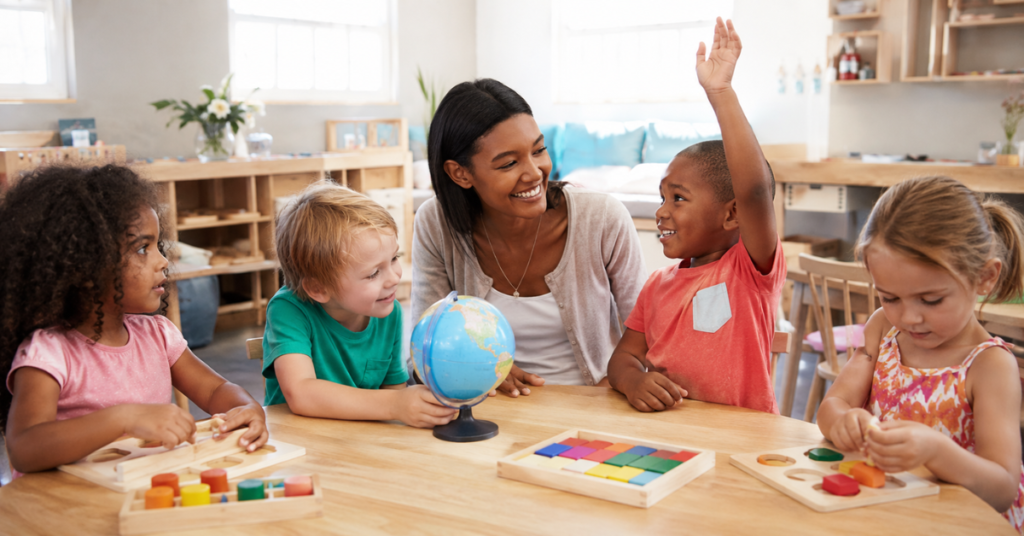
- Watch the kids, not the walls. Are they talking, choosing, and moving with purpose, or quietly filling out the same sheet at the same time?
- Listen to how a teacher handles a wrong answer. Do they correct it and move on, or do they ask “what makes you think that?” and let the child work it out?
- Ask what happens when a child gets stuck or upset. The answer tells you whether the program treats struggle as a problem to remove or a moment to teach.
- Notice how much the children talk versus how much the adults talk. Rooms where kids do most of the thinking out loud are rooms where thinking is actually being built.
A silent, perfectly compliant room can look impressive on a tour. It usually means the children have learned to wait for instructions rather than think on their own.
The choice isn’t academics or confidence
A lot of parents feel stuck between two camps, as if they have to pick between a program that teaches real skills and one that protects their child’s love of learning. That choice is false, and it’s worth saying plainly.
Confidence and thinking are not a break from academics. They’re what make academics stick. A child who feels safe being wrong learns to read faster, because they’ll sound out a hard word instead of going quiet. A child who likes solving problems takes to math more easily, because numbers feel like a puzzle rather than a test. The skills feed each other, and a good preschool refuses to treat them as a trade.
The bottom line
Parents choosing these programs aren’t following a trend. They’re responding to something they can see with their own eyes: a child who can recite the alphabet but falls apart at the first hard moment isn’t really ready, and the child who keeps trying almost always catches up and passes the one who only memorized.
School is only going to keep asking children to think, adapt, and recover from being wrong. Those habits don’t switch on in kindergarten. They start at three and four, in the small daily choice between handing a child an answer and helping them find it. Parents who understand that are picking preschools accordingly, and their kids tend to walk into kindergarten not just knowing things, but ready to learn whatever comes next.
FAQs
Is an academic preschool too much pressure for a young child?
It depends entirely on how the academics are taught. Flashcards and worksheets can absolutely overwhelm a young child. The same skills taught through play, questions, and hands-on activities do the opposite, because the child rarely feels tested. The pressure comes from the method, not from the academics themselves.
My child is shy. Will a confidence-focused program overwhelm them?
A good program helps rather than pushes. Confidence has nothing to do with forcing a quiet child to perform. It comes from small, low-pressure chances to try, be wrong, and try again until speaking up feels safe. Shy children often do especially well in these settings, precisely because mistakes aren’t punished or spotlighted.
When should critical thinking start?
Earlier than most people expect. By age three, children are already predicting, comparing, and asking why. You don’t teach critical thinking through formal lessons at this age. You build it by asking questions during ordinary moments and letting the child reason instead of handing them the answer.
How is this different from regular daycare?
Daycare centers mainly on care and supervision, which young children need. The difference is intent. An academic preschool built around confidence and thinking is designed so that play teaches specific skills, teachers ask questions on purpose, and every activity has a reason behind it beyond keeping children busy.
Will this actually prepare my child for kindergarten?
Usually better than a program focused only on memorization. Kindergarten readiness is as much about behavior and mindset as it is about letters and numbers. A child who can focus, follow a group lesson, ask for help, and keep going when something is hard is often more prepared than a child who knows more facts but stalls the moment the work gets difficult.