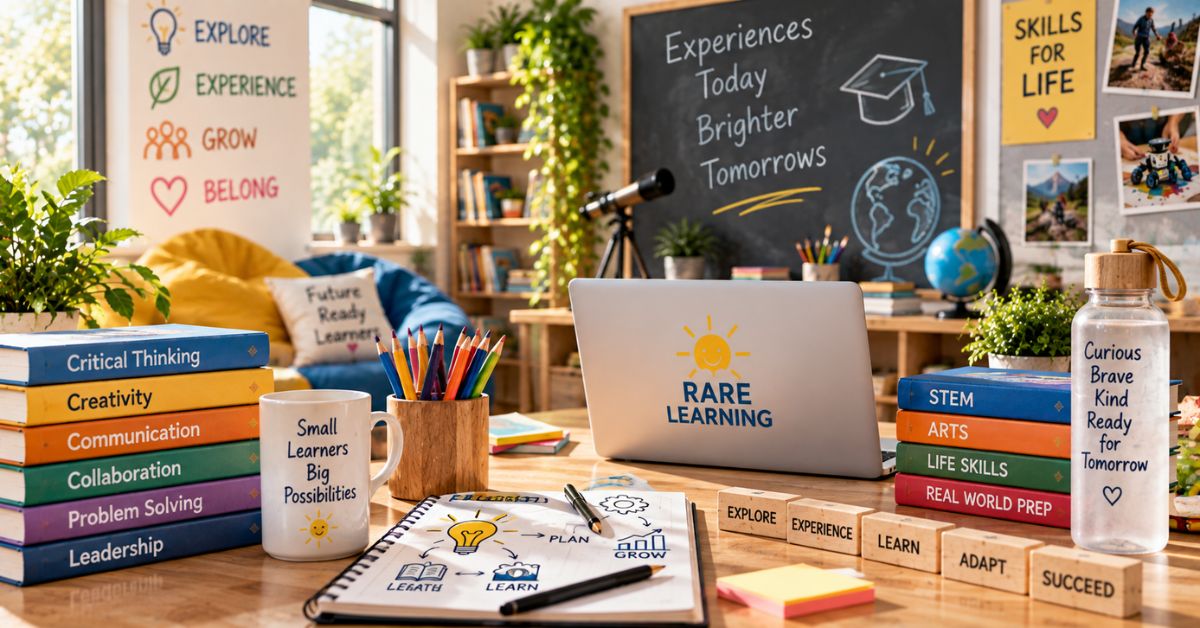
Rare Learning connects academic foundations with the habits children need to keep learning: asking questions, explaining ideas, working with others, and approaching unfamiliar tasks. Its approach combines hands-on exploration with personalized guidance, giving children opportunities to practice these abilities alongside literacy, math, and science. This connection between active participation and foundational skills runs through Rare Learning’s approach to early education.
For parents, the important question is how those choices translate into useful skills. The answer lies in what children are encouraged to do during learning, from reconsidering a puzzle piece to explaining a decision.
Personalized Instruction Builds Independence
Rare Learning’s Pre-K program emphasizes individual attention, personalized lessons, and mastery of concepts. Its structure includes both one-on-one instruction and supervised practice, creating opportunities to work with support and then apply a skill.
Consider a child who can recite numbers but has difficulty counting objects accurately. An appropriate next step might be moving each object as it is counted, followed by trying another group independently. The challenge addresses the specific misunderstanding.
This illustrates how individual guidance can support independence. Help gives children a manageable next step; practice lets them take responsibility for it. Rare Learning’s discussion of individualized attention emphasizes observing where a child gets stuck and adjusting the support accordingly.
Hands-On Challenges Make Problem-Solving Concrete
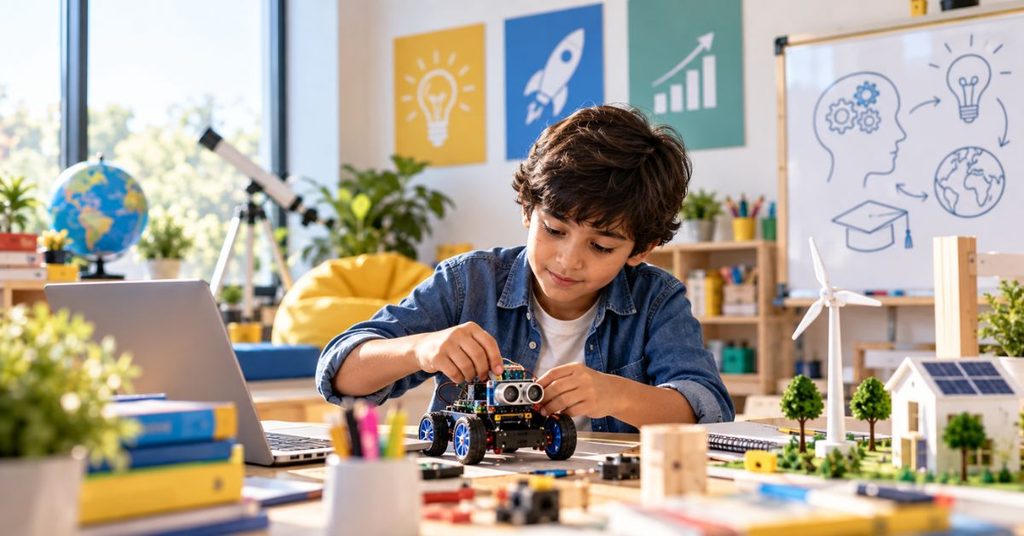
Building and puzzles make the consequences of a decision visible. A piece fits, a structure tips, or a different arrangement works. Children have something specific to examine when they decide what to change.
Rare Learning’s guide to building, drawing, and puzzles explains how these experiences involve planning, spatial thinking, and persistence. Their value comes from the decisions children make while completing them.
A useful adult prompt might be, “Which part needs more support?” The child must inspect the problem before choosing a solution. Repeated opportunities to notice, adjust, and try again can make unfamiliar challenges feel more manageable.
These habits have a clear future application: schoolwork increasingly asks students to explain their methods, spot mistakes, and revise an answer. Hands-on play offers an accessible starting point.
The Pre-K science curriculum also includes living and nonliving things and changes in matter. These topics can invite closer observation: what changed, what stayed the same, and which details support an answer? Such questions give curiosity a direction.
Varied Activities Encourage Flexible Thinking
Presenting an idea through different activities gives children several ways to understand and use it. Rare Learning describes art, music, and storytelling as parts of its hands-on approach.
For example, a child could clap a repeating rhythm, arrange objects in the same pattern, and describe what comes next. Each step asks the child to recognize the relationship in a different form. Rare Learning’s discussion of music in early learning connects rhythm and movement with patterns, counting, and following directions.
The practical benefit is flexibility. A familiar idea becomes something a child can recognize beyond its original activity. That matters when students encounter the same concept in a diagram, a written question, or an everyday problem.
Language Activities Help Children Explain Their Thinking
Rare Learning’s preschool curriculum includes phonics, simple sentences, and listening comprehension. These foundations give children tools for understanding instructions and expressing what they know.
Conversation adds an essential dimension. When a child explains why a story character acted a certain way, the child practices connecting an opinion with a reason. Retelling events also requires deciding what happened first and which details a listener needs.
Rare Learning’s guidance on early reading and speaking skills encourages shared reading, open-ended questions, and meaningful everyday conversation.
Parents can extend this approach by asking children to explain a drawing or describe how they completed a task. Clear explanations become increasingly useful in classroom discussions, collaborative assignments, and presentations as students grow.
Guided Technology Use Connects Digital Activities With Understanding
Rare Learning’s curriculum philosophy includes computers among its teaching tools and emphasizes one-on-one coaching or mentoring when children use technology for learning.
For example, after a digital sorting task, an adult could ask the child to explain the rule and sort physical objects. This connects a screen-based task with everyday reasoning.
Pausing to discuss choices offers a starting point for using digital tools thoughtfully as learning tasks become more complex.
Shared Creative Work Gives Collaboration a Purpose
Rare Learning’s emphasis on active participation also appears in its separate summer camps for ages 9–15. These programs show how creative learning can involve more demanding tasks as students get older.
In filmmaking, participants explore scripting, production, and editing while collaborating on a short film. Junior Newsroom includes interviewing, storytelling, and performance as students develop news segments. Claymation involves creating characters, a script, and a storyboard for an animated film.
These projects give communication a practical purpose: other people need to understand the idea for the finished work to succeed. They also create opportunities to coordinate contributions and connect planning with execution.
The broader lesson is responsibility within a group. A shared project invites students to consider how their choices affect the work others are doing, an important skill for later academic collaboration.
Parent Involvement Helps Learning Carry Into Daily Life
Rare Learning describes periodic progress reports that compare children’s achievements with their own earlier performance. Its philosophy also encourages parents to connect educational activities with experiences in the child’s surroundings.
Families can use those updates to choose a relevant activity. For descriptive language, ask how two household objects differ. For sequencing, ask the child to describe getting ready to leave home.
These practical extensions of the parent involvement approach give children opportunities to use a skill in another setting.
FAQs
What future-ready skills does Rare Learning’s approach support?
Its activities provide opportunities to practice problem-solving, communication, flexible thinking, independence, and collaboration alongside academic foundations. Progress depends on each child’s development and participation.
How does Rare Learning balance play and academics?
Its preschool approach combines hands-on activities with guided instruction in literacy, math, and science. Games and creative tasks give children practical ways to engage with concepts.
Does personalized learning mean children work alone?
No. Rare Learning’s Pre-K structure includes individual instruction and supervised practice. Personalization concerns the support and challenge a child receives; it does not require isolation.
Are filmmaking and newsroom activities part of preschool?
They are listed as separate summer camp offerings for ages 9–15. Families should review the relevant program page when choosing activities for their child’s age.